US tarrif: Oil, Sanctions and real story no one is talking about
The headlines around recent US tariffs on India have focused on geopolitics, sanctions, and the Russia-Ukraine war. But if you peel back the layers, you’ll find a story that isn’t being told enough—about oil profits, global lobbies, and the tug-of-war over India’s markets.
ECONOMICS
5/8/20243 min read
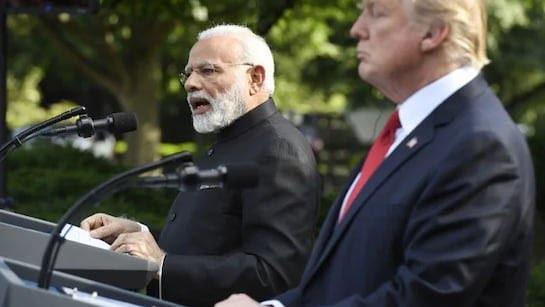
The recent US tariffs on Indian exports are being reported as fallout of India’s Russian oil purchases. But dig a little deeper and you’ll see it’s not so straightforward. The story isn’t only about Moscow and Washington. It’s also about how the benefits of cheap crude were distributed inside India, why the US is targeting us while ignoring China, and how powerful farm lobbies in America may be the real drivers of this pressure.
Cheap Russian Oil: Who Benefited?
When India pivoted to discounted Russian crude, the expectation was cheaper petrol and diesel for ordinary Indians. That never happened. Refiners pocketed the spread. In Apr–Jun 2025 (Q1 FY26), Reliance’s oil-to-chemicals EBITDA rose ~10.8% YoY to ₹14,511 crore. State-run refiners—Indian Oil, BPCL, and HPCL—posted a combined net profit of ₹16,184 crore, more than 2.5× last year. Analysts noted this was fueled by elevated retail marketing margins, sometimes ₹8–₹12 per litre above “normative” levels, while pump prices stayed flat. This is exactly the dynamic that US officials seized on. White House trade adviser Peter Navarro, in a Fox News interview, claimed: “You’ve got Brahmins profiteering at the expense of the Indian people. India is a laundromat for the Kremlin’s money.” The remarks provoked outrage in India, with critics slamming them as casteist, undiplomatic, and dangerously reductive. But they underline the perception abroad that Indian refiners—and not ordinary consumers—reaped the windfall. Even former RBI Governor Raghuram Rajan suggested: if refiners captured supernormal profits thanks to discounted crude, why not tax those windfalls and use the money to shield sectors now hit by tariffs? A targeted profit tax could recycle gains where they’re most needed.
Why Only India? The China Question
The US narrative is that tariffs punish India for being Russia’s oil lifeline. But the numbers tell another story: India now accounts for ~36% of Russia’s seaborne crude exports. China takes ~47%—an even larger share. So why is India singled out, while China escapes similar treatment? If Washington really wanted to punish Russia, the straightforward step would be sanctioning Russian crude outright—as was done with Iran and Venezuela. But Russian oil flows are left untouched, partly because European and Asian markets still depend on them. That makes India a softer target, easier to pressure than Beijing.
Tariffs, Sanctions… or Farm Lobbies?
Here’s the part most commentary skips: US tariffs may not only be about Russia at all. They also echo a long-standing push by US farm lobbies to access India’s market. American agriculture—soybeans, dairy, corn—is heavily subsidized and often faces oversupply. For years, US negotiators have tried to pry open India’s tightly guarded farm markets. But New Delhi has consistently resisted, arguing that cheap US imports would devastate Indian farmers. These lobbies aren’t just interest groups—they’re political powerhouses. The American Farm Bureau Federation, National Corn Growers Association, and US Dairy Export Council wield serious influence in Washington, especially during election cycles. Farm states play a critical role in both presidential and congressional races, making them nearly untouchable for any administration. So when India says no to US farm goods, tariffs on Indian exports suddenly appear. It looks less like a principled stand on Russia and more like an economic lever to make India bend on agriculture.
What This Really Means
When you connect the dots, the pattern is clear: refiners in India kept most of the benefits of Russian oil, while consumers saw little relief. The US is selectively tough, ignoring China’s much larger purchases. Farm lobbies in Washington may be pulling more strings than sanctions policy. And into this mix, you have loaded rhetoric from US officials—like Navarro’s “Brahmin grab” line—that oversimplifies a complex issue while feeding domestic narratives. The real question for India isn’t just how to respond to US tariffs. It’s whether we can design policies that ensure the benefits of geopolitical arbitrage—like discounted crude—are shared more fairly, and whether our farmers can be shielded from becoming bargaining chips in someone else’s trade war.