Seeing the end of things: The prophetic way of being pragmatic
Being pragmatic in Islam isn’t about depending on ourselves alone — it’s about doing what must be done, then leaving space for Allah to complete it. This reflection traces that balance through the actions of ʿUmar (RA), Khabbab (RA), and the Prophet ﷺ.
Afnan Samdani Khan
11/3/20254 min read
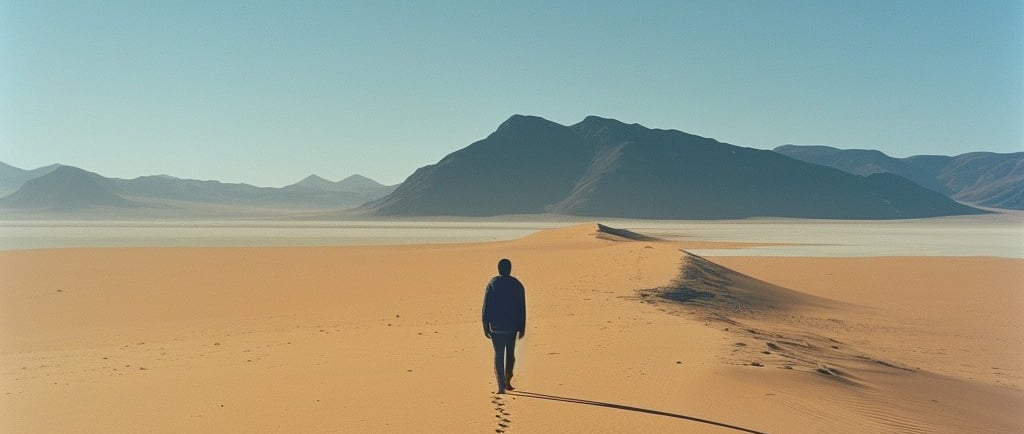

Allah created humans with the ability — and responsibility — to look to the end of things when they begin something. If I plan a journey, I must think about how I’ll return safely. That’s foresight. That’s practicality. That’s seeing the end of things. And that’s how a human is meant to behave.
The Sunnah of the Prophet Muhammad ﷺ never called us to abandon reason, planning, or effort in favor of blind reliance. It taught us to be practical — and then to rely on Allah.
Seeing the end of things gives purpose to beginnings. It’s what sustains us through the monotonous, sometimes painful, middle. It’s what makes a believer move forward when outcomes seem uncertain.
I once came across a hadith that deeply connects to this.
Narrated Khabbab bin Al-Art:
"We complained to Allah's Messenger (ﷺ) (about our state) while he was leaning against his sheet cloak in the shade of the Ka`ba. We said, "Will you ask Allah to help us? Will you invoke Allah for us?" He said, "Among those who were before you a (believer) used to be seized and, a pit used to be dug for him and then he used to be placed in it. Then a saw used to be brought and put on his head which would be split into two halves. His flesh might be combed with iron combs and removed from his bones, yet, all that did not cause him to revert from his religion. By Allah! This religion (Islam) will be completed (and triumph) till a rider (traveler) goes from San`a' (the capital of Yemen) to Hadramout fearing nobody except Allah and the wolf lest it should trouble his sheep, but you are impatient."
(Sahih al-Bukhari, 6943)»
When the Prophet ﷺ said, “this religion will be completed,” it wasn’t just a prophecy — it was a lens through which his companions could see the end of things. Amid their pain and uncertainty, he allowed them to visualize the completion of what had begun. That vision became their reassurance, their motivation, their fuel.
To see the end is not to be impatient. It is to be driven by clarity, anchored in faith.
The advice of ʿUmar ibn al-Khaṭṭāb (RA) beautifully reflects this mindset — of seeing what lies beyond the moment, of being conscious not just of now, but of what comes after.
Narrated Salama:
Once (on a journey) our provisions diminished and the people were reduced to poverty. They went to the Prophet (ﷺ) and asked his permission to slaughter their camels, and he agreed. `Umar met them and they told him about it, and he said, "How would you survive after slaughtering your camels?" Then he went to the Prophet and said, "O Allah's Messenger (ﷺ)! How would they survive after slaughtering their camels?" Allah's Messenger (ﷺ) ordered `Umar, "Call upon the people to bring what has remained of their food." A leather sheet was spread and all the food was collected and heaped over it. Allah's Messenger (ﷺ) stood up and invoked Allah to bless it, and then directed all the people to come with their utensils, and they started taking from it till all of them got what was sufficient for them. Allah's Messenger (ﷺ) then said, "I testify that None has the right to be worshipped but Allah, and I am His Messenger."
(Sahih al-Bukhari, 2484)»
ʿUmar’s concern wasn’t resistance — it was foresight. He wanted to see the end of things. He wasn’t looking only at the hunger of the moment, but at the survival of the journey. His thinking was not just about immediate comfort, but about endurance — ensuring that the means of sustenance lasted until they reached home.
That is the heart of pragmatism: to anticipate what lies beyond your sight, and act accordingly.
The Prophet ﷺ did not dismiss ʿUmar’s reasoning, nor did he rely solely on human logic. He brought both worlds together — human planning and divine reliance. After the people gathered their food, the Prophet ﷺ invoked Allah’s blessing, and what was limited became abundant.
This is Islamic pragmatism: to act with reason, plan with foresight, and then surrender the outcome to Allah.
It’s about finishing what you start — not only by human effort, but by divine completion.
At the Battle of Badr, this principle came alive in its purest form. After preparing the army, setting the lines, and taking counsel, the Prophet ﷺ turned to Allah in dua until his cloak slipped from his shoulders:
«“O Allah, accomplish what You have promised me. O Allah, if this small group of Muslims is destroyed, You will not be worshipped on earth.”
(Sahih Muslim)»
This wasn’t desperation — it was culmination. The Prophet ﷺ had done all that could be done. This dua wasn’t separate from action; it was the final action. It was how he ensured that what began with effort would end with fulfillment.
That’s what true pragmatism looks like.
It isn’t just planning or preparing — it’s tying the last knot with dua.
To be pragmatic, in the Islamic sense, is to begin with wisdom, walk with clarity, and end with surrender.
When ʿUmar (RA) thought ahead, when the Prophet ﷺ made dua at Badr, when Khabbab (RA) was reminded that the end will surely come — all of them lived the same truth: that our role is to move, think, plan, and persevere, while knowing that the final unfolding lies in His hands.
That’s the harmony Islam calls us to — not passivity, not anxiety, but purposeful movement wrapped in trust.
It’s when effort and reliance meet that things truly reach their end.